





Literally a breath away from Athens, Salamina is the island that transports you from the ancient history of Greece to the 20th century.
The largest island of the Saronic Gulf and the closest to Athens, Salamina, or Koulouri as it was known in antiquity, makes an ideal escape for one or more days - for strolling, swimming, dining, and sightseeing. The trip from Perama takes just 15 minutes by ferry boat and services during the day depart every quarter hour.
According to mythology, the island took its name from Cychreus, who wished to honor his mother Salamina, daughter of the river god Asopos and sister of the nymph Aegina. Salamina was brought there by Poseidon, who fell in love with her, and she bore Cychreus in this place.
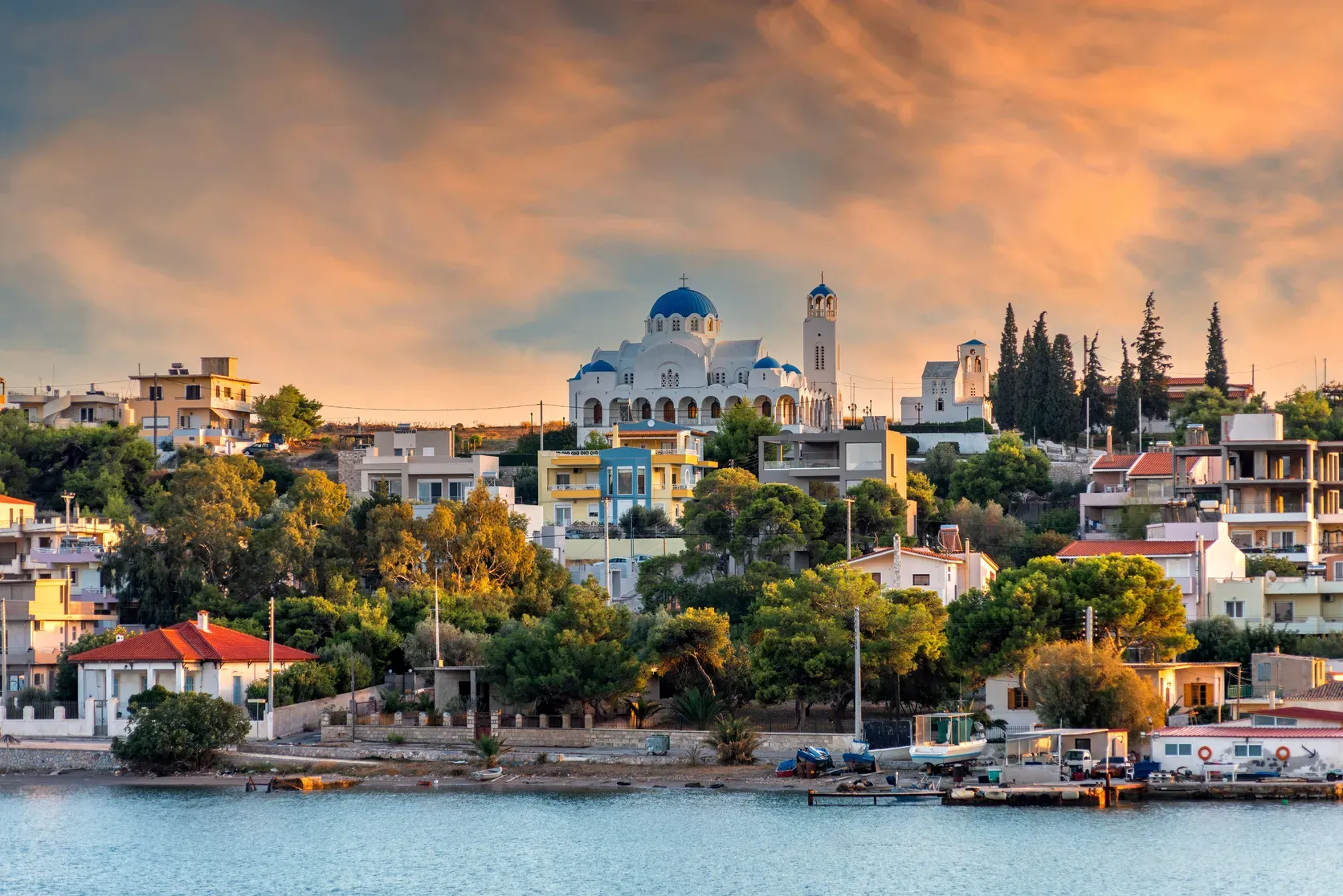
Salamina’s history is intertwined with the Homeric hero Ajax the Telamonian, king of the island, as well as with the glorious Naval Battle of 480 BC between the Greeks and the Persians. Every September, a reenactment of the battle takes place along with other festive events on the island. The historical interest does not end in antiquity, as the fighter of the 1821 Revolution, Georgios Karaiskakis, operated here and asked to be buried here, while the poet Angelos Sikelianos lived a large part of his life on the island.
What to see and do in Salamina
The town of Salamina
The town of Salamina is ideal for walks from morning till night. Along the entire length of the seafront beats the heart of the town, with cafés, tavernas and traditional ouzeris that fill up from noon onward. Leisurely strolls with views of the Saronic bring carefree holiday moments to mind all year round.

Climb Patris Hill just outside the town to admire the bay of Salamina from above, and to visit the Euripides Theatre, built in the 1990s in the style of ancient theatres to honor the great tragic poet Euripides. There too stands the church of Panagia Eleftherotria, built on the ruins of the gun emplacements installed by the Germans during the occupation. Opposite Patris Hill stands the chapel of Prophet Elias, built atop the rock of the same name, with wonderful views across the whole island.
Archaeological Museum of Salamina
Housed in a building that served as a school under Kapodistrias from 1830 until as recently as 1981, the Archaeological Museum of Salamina opened its doors to the public 15 years ago. It is located very close to the coastal road Akti Karaiskaki and the town pier. Its collections are displayed in the galleries and the inner courtyard and include mainly finds from excavations across the island, such as funerary stelae, as well as works of pottery and sculpture, covering the entire span of the island’s ancient history, from prehistoric times through Late Antiquity.
Holy Church of Saint Demetrios of Salamina - Tomb of Georgios Karaiskakis
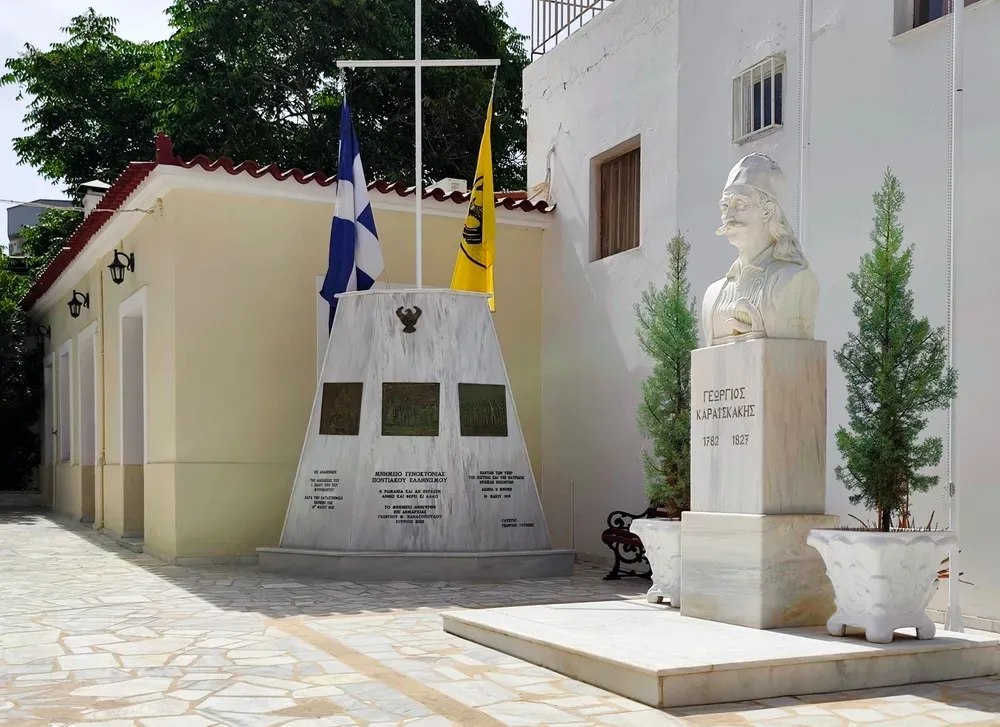
The Holy Church of Saint Demetrios in Salamina is one of the island’s most important historical and religious monuments. It was the first parish of Salamina and, beyond its religious interest, it also has artistic value, as you will encounter works by the foremost sculptor Giannoulis Chalepas—the Bishop’s Throne, the pulpit and the icon stand—as well as the iconostasis crafted by the Salamina-born painter Polychronis Lebesis. The church’s history is also linked to the Revolution of 1821, as within its courtyard is kept the tomb of the legendary hero Georgios Karaiskakis. Karaiskakis breathed his last in 1827 at the Battle of Faliro, and his burial on Salamina was chosen to honor his memory and sacrifice.
Folklore Museum of Salamina
The Museum of Folk Art & History of the Municipality of Salamina is housed in the New Town Hall- Cultural Center of the town. There you will learn more about the daily life of the residents in earlier times. Of particular significance is the collection of local men’s and women’s costumes, furniture and household utensils from various eras, as well as looms, ceramics and bronze objects of everyday life. The island’s dress history is evident in the collection of zipounia (jackets), which takes us 300 years back. The exhibits also include weapons from the Revolution of 1821, icons and ecclesiastical vessels, as well as rare documents from the 18th and 19th centuries.
Faneromeni Monastery and Angelos Sikelianos House
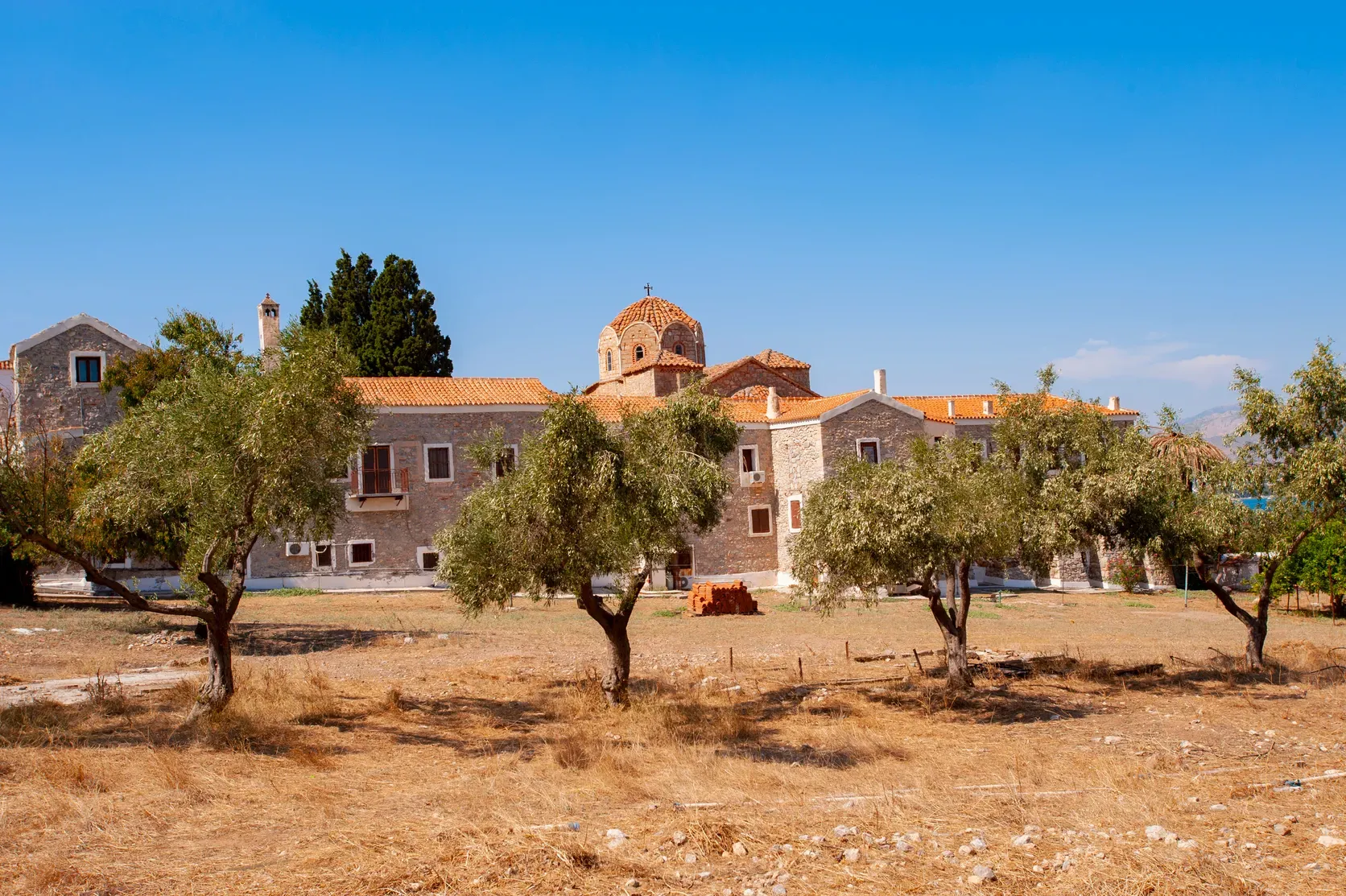
The largest monastery on the island is built in an idyllic location by the sea. Faneromeni Monastery, with its stone-built structures and lush green courtyard, is filled inside with striking iconography. Every August it attracts crowds of faithful who wish to honor the Nine Days of the Theotokos on August 23.
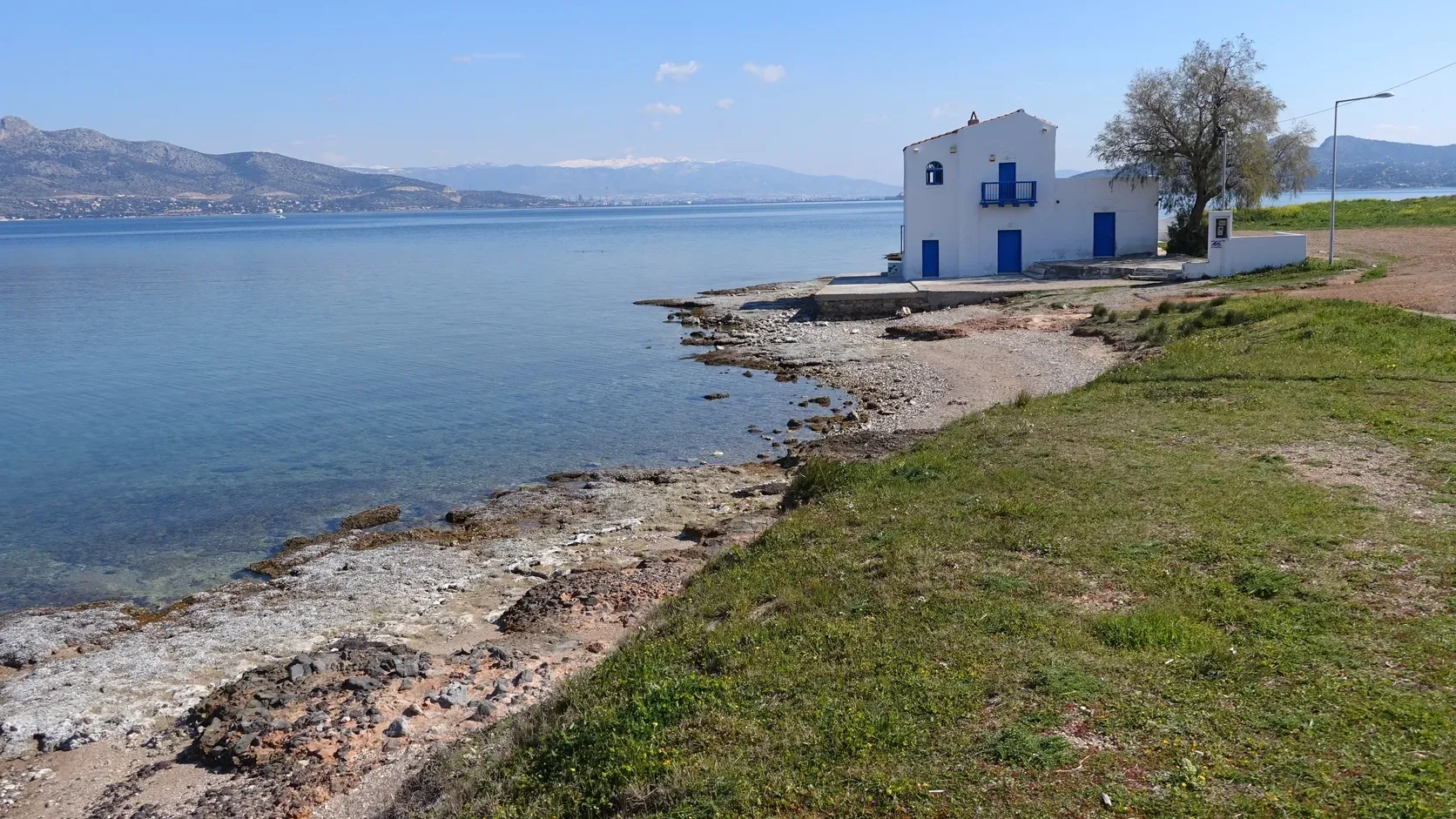
Opposite the monastery, right on the waterfront, stands the house and the bust of the great Greek poet Angelos Sikelianos, restored about two decades ago. One of the island’s ten windmills once stood here. The poet arrived on Salamina in the 1930s and was captivated by the monastery and the beauty of the area. In this house he lived much of his life with Anna Kampanari and created a significant part of his work. Inside there are exhibits such as the couple’s everyday objects and furniture, photographs and letters, and visits are by appointment (+30 213 2027316), +30 213 2027317).
The Cave of Euripides

At the southernmost point of Salamina, near Peristeria Bay, lies the impressive Cave of Euripides, a natural monument of distinct historical and archaeological value. Excavations carried out in the ’90s revealed that the cave was used in various periods, from the Neolithic era to the Roman and Frankish periods, while significant finds were unearthed, such as weapons, jewelry, coins and ceramics. Near the cave there was also a sanctuary of the god Dionysus. Standing out is a skyphos of the 5th c. BC bearing the engraved name of Euripides, confirming the great tragic poet’s link with the cave. The cave’s finds are exhibited today at the Archaeological Museum of Salamina. It is worth a visit to the cave to admire the view over the Saronic, which is enchanting.
Ancient Salamina
Salamina, with its long history since antiquity, has several points of archaeological interest that have been preserved over time. South of the town, at the site of Kolones, you will find the Circular Funerary Monument of the 4th century BC. A short distance from Euripides’ cave lies the Sanctuary of Dionysus, a building complex of the Hellenistic period.
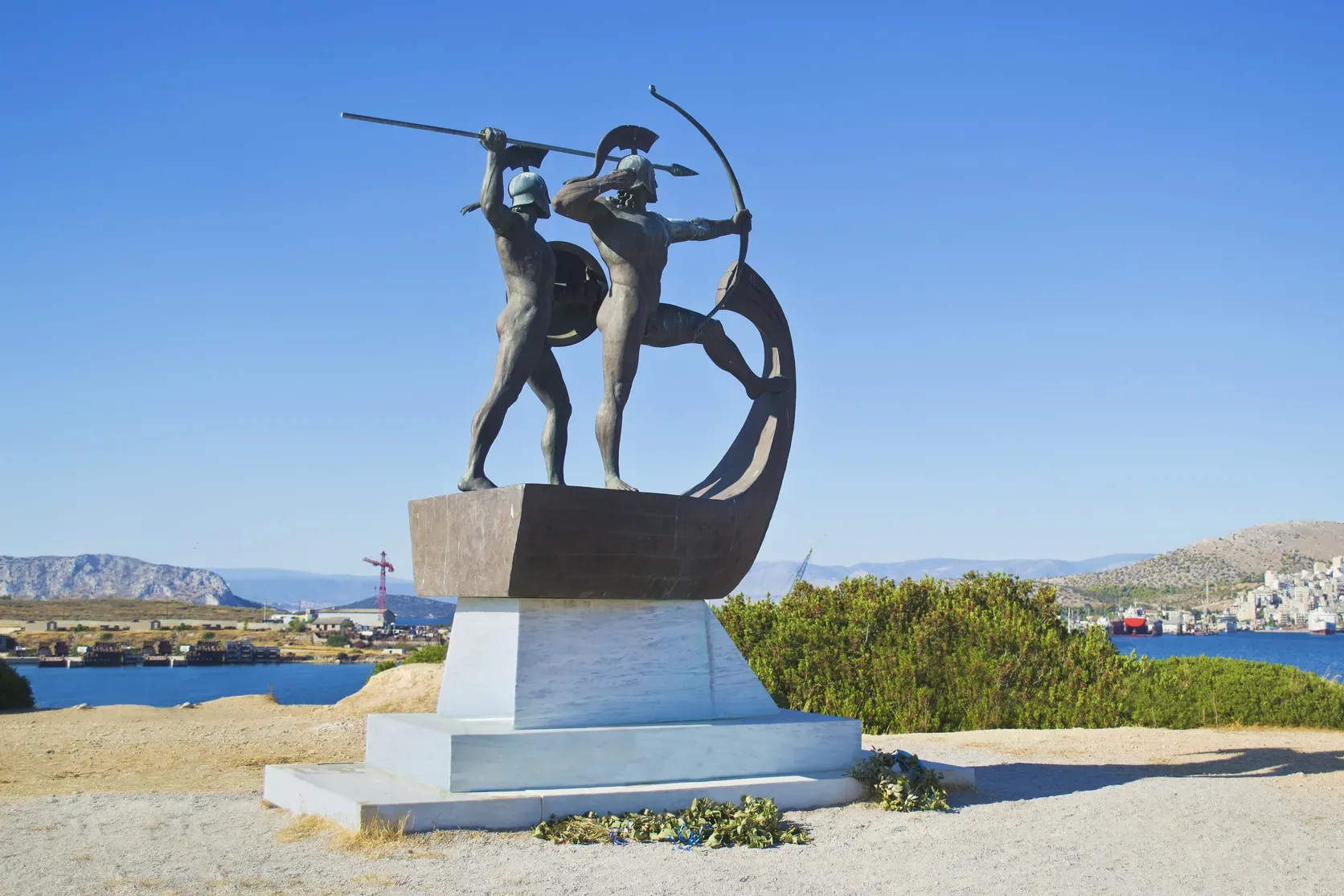
At Kanakia, excavations uncovered the Mycenaean Acropolis of the 13th century BC, which includes a main palatial complex with a twin megaron. The finds from the Mycenaean Acropolis at Kanakia are housed in the Archaeological Museum of Salamina. According to excavation research, the Tumulus of the Salamis fighters is located on the northern coast of Kynosoura, in front of the stretch of sea where the historic Battle of Salamis took place in 480 BC. In the same area stands the bronze statue of the Salamis fighters, a work by the sculptor Achilleas Vasileiou.

A short distance from the Tumulus of the Salamis fighters spreads the town of Ampelakia, the island’s capital during the Classical period with great economic prosperity. A section of the wall of the ancient city has been identified, as well as some remains, such as the ancient harbor where the naval battle unfolded.
The island’s beaches
On Salamina you will find beaches perfect for refreshing dips and moments of relaxation. Some are organized with beach bars, and others quiet and unorganized. Popular Kanakia, with turquoise waters and pebbles, is ringed by pines, while Psili Ammos has a sandy shore and shallow waters. Selinia, with wonderful views toward Piraeus, is close to the island’s capital and offers options for food and coffee by the sea.
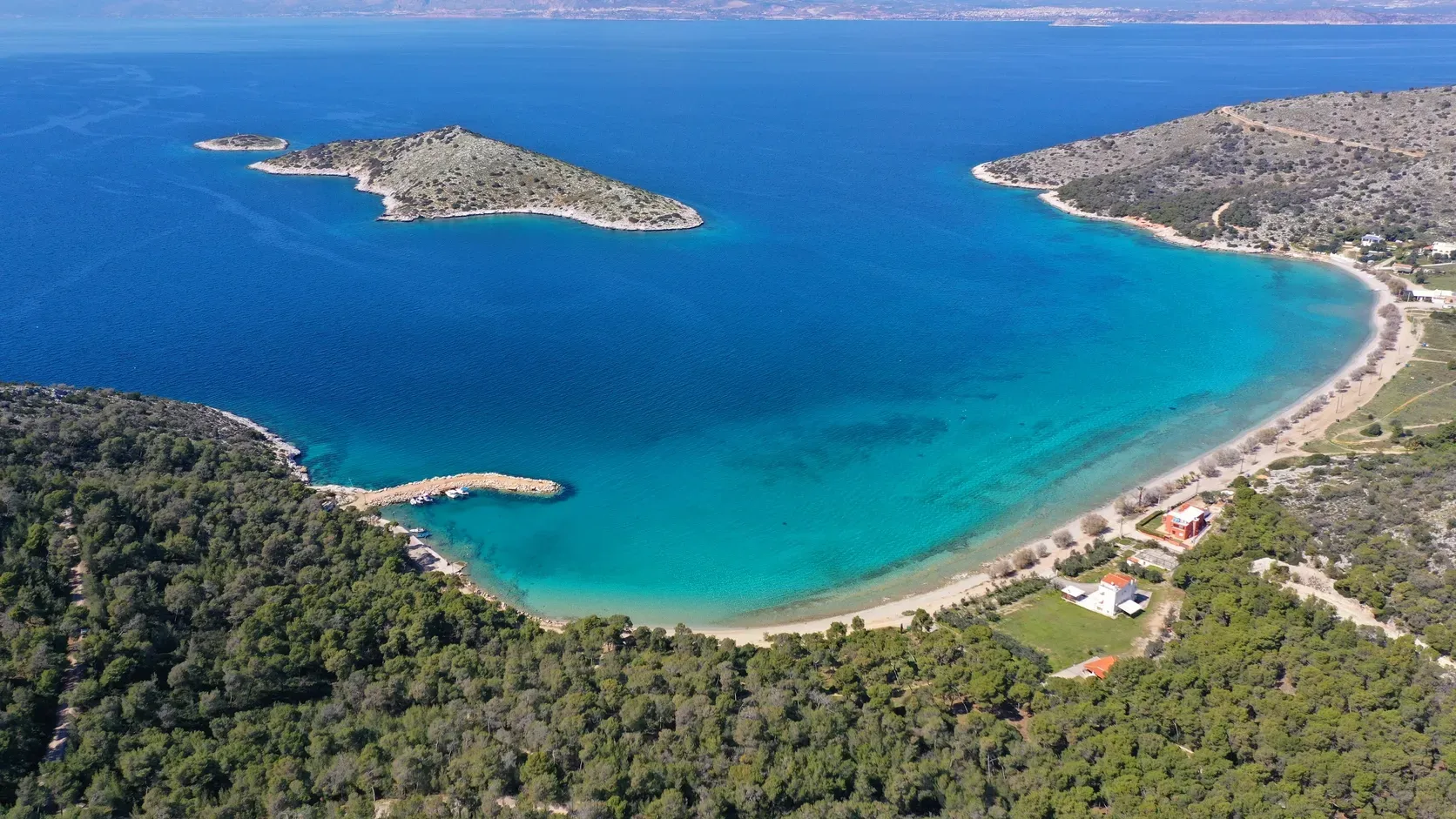
For quieter moments head to Perani (East and West) and for a livelier vibe to Aianteio, the seaside town’s beach, which also has accommodation options. The NATO beach is located there too. Agios Georgios has clear waters and tamarisk trees and Alyki a sandy shore and fish taverns. You’ll find sandy shores at Iliakti and Zephyros.
Stops for food
On Salamina you will find plenty of places for seafood and ouzo. Μεζεδοπωλείο Παραλία Ουζερί is a local favorite for fresh fish, while Ουζερί ο Κάκιας on Akti Karaiskaki has been known for years, including among Athenians. You can also dine right by the sea at Μπουκουρίμιζα, sit on the sand at Θηνιό, while at the Salamina Municipal Fish Market you’ll find Ουζερί- Ψαροταβέρνα Αγκυροβόλι. The Ψαροταβέρνα Μπακοθανάσης, although it is not on the waterfront, steals the show as it looks straight out of an old Greek movie.